

Hello Gobbledeers,
How’s it going? I wish you could appreciate how unbelievably freezing it is in the Gobbledy HQ, and how cold my ancient, shriveled fingers are while typing. That’s how much this newsletter means to me - I’m truly suffering :)
One note from last week: In the newsletter I referred to Poppi soda as “revolting.” One member of my family requested a correction, suggesting that Poppi is “not revolting.” My apologies - we will try to do better in the future.
Today we’ve got:
AI will increase the size of our teams (if you say it will).
How to improve your homepage headline 173,483% with this one weird trick (and 3 other tricks).
Your Robot Overlords Are Also Your Co-Workers Now
You may have read someplace that AI will impact how all of us work and what work you do and whether you’ll work at all. Or maybe you read that every place. Yes, probably every place.
I have no idea if AI will impact how/where/whether you will work in any sort of permanent sense.
(Very minor digression: I have my doubts, and if you are someone who also has doubts, it will be worth 10 minutes of your time to read the text of this speech by author Cory Doctorow that speaks to some of those doubts. If you do not have doubts, it’s probably also worth your time because it’s valuable to understand perspectives that are you different from yours. [Oh, that’s funny.] In this case, Doctorow argues that his concern aren’t the AI-based products, it’s the bubble around those products:
If there had never been an AI bubble, if all this stuff arose merely because computer scientists and product managers noodled around for a few years coming up with cool new apps… most people would have been pleasantly surprised with these interesting new things their computers could do. We’d call them “plugins.”
It’s the bubble that sucks, not these applications. The bubble doesn’t want cheap useful things. It wants expensive, “disruptive” things: Big foundation models that lose billions of dollars every year.
(End of Digression.)
I spend a lot of time thinking about how the AI Industrial Complex (tm) talks about AI, because how they talk about it impacts how we all think about it.
You may remember a few months back we talked about Sam Altman’s need to raise 30 times the amount of venture capital that exists on Earth. And to do that, he would need one helluva compelling story. I suggested he had, in fact, two helluva compelling stories: 1) Unless you invest in OpenAI artificial intelligence will kill all of us; and 2) he really, really thinks he’s this close to building a God-like thingydingy if only had many trillions of dollars to do it.
So that set the context for how we’ve been talking about AI - it’s an all-powerful God-like thingy that may or may not destroy humanity, but also will disrupt how everyone does everything, and also will let you create an infinite number of LinkedIn posts.
If you’re the CEO of a company, you’re going to have to address AI in some manner. We’ve also talked about this - companies saying they’re shrinking their workforce because of all the AI; then companies saying they’re NOT shrinking the workforce because of AI; and companies saying they’re paying AI experts $100 million. CEOs put all of these stories out there to show how AI has changed the game (“we don’t need employees!” Or, “we need more employees” or “AI matters so much that we’ll pay employees $100 million to help us with it!”)
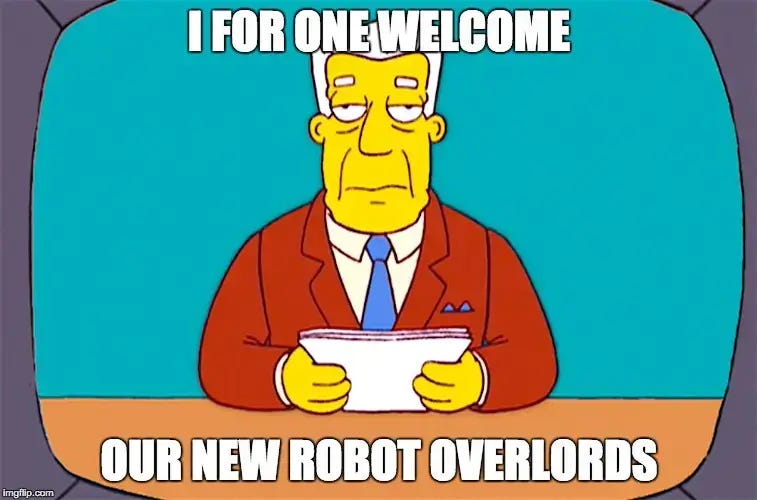
But if you’re a CEO, you can’t stop at “we think AI is so important that we’ll pay people who understand it $100 million.” In for a penny, in for a pound as some people say (not me - other people). And it’s kinda too late to dial down the rhetoric. The business world has collectively gone with the Kent Brockman approach:
So maybe I shouldn’t have been so struck by this exchange that the CEO of consulting firm McKinsey had with the hosts of the podcast HBR IdeaCast:
Host: “How many people do you employ?
McKinsey CEO: “I now update this almost every month, but my latest answer to you would be 60,000. But it’s 40,000 humans and 20,000 agents.”
This is so interesting. I can’t think of a single time in the past when a new technology has come along to increase productivity where we talked about that as a way to add a new type of worker. Robots in automobile factories were robots - Ford’s CEO didn’t go around bragging that they’ve tripled the size of their employee base if you count robots. 75 years ago, no CEO said that dictation machines added tens of thousands of secretaries to the workforce (plus it would’ve been very difficult to sexually harass tens of thousands of dictation machines back in 1961).
McKinsey has shrunk its (human?) workforce by 10% or so over the past 4-5 years. Its CEO could have said “we’ve been able use technology to reduce our headcount while still increasing revenue and providing outsized value to our clients.” But he did not - he decided to say that AI is allowing his workforce to grow - that AI isn’t about shrinking the team, it’s about growing it.
McKinsey sells intellectual capital - basically, it sells human thought. If the recent knock on consulting firms has been that AI will replace consultants, then the best communications strategy for a consulting firm would be to say that you’re right…but AI will not replace consulting firms. Those firms will just be staffed with AI consultants.
And, as we always say around here, it’s best to be first. McKinsey’s comms strategy here is the first I’ve seen in consulting where the strategy is to embrace its critics, but then turn around to show how actually those criticisms make the company stronger. “Your criticism is correct, but actually it’s a benefit” is a great communications strategy.
If McKinsey’s CEO walks around all day telling reporters that they’re shrinking their workforce because they don’t need as many people because they have good AI tools, that feels like an admission that your whole model of selling human thought is at risk.
But if he walks around all day telling reporters that they’re growing their workforce because of AI, it shows they’re embracing the future AND doing it while building on -not blowing up - their core business.
I hesitate to admit it, but that’s a McKinsey-level strategy right there. Well done.
4 Ideas for How to Fix Your Homepage
Gobbledy started as a newsletter about software homepages and how to make them better, and sometimes I like to go back to basics and follow my own advice (my own advice being - in addition to always be first - you can always go back and focus on the first thing you did.). So today I thought I’d share some news-you-can-use kinda thing and talk about homepage headlines.
To start, here’s what I suggest you do:
Go to your own homepage. Write down the headline and subhead. Then do the same for 3 or 4 of your competitors. Put them on a whiteboard and invite your team members into the room. This assumes, of course, that you have a room, a whiteboard and a team.
Ask them if they can match the headline to the company. Best case, they know that your headline is your headline and the other 3 all sound like gobbledy.
Most likely, though, all 4 of them sound like gobbledy.
Companies frequently try to get too cute with their headline, making it a waste of that space because it doesn’t actually tell the customer anything. A homepage headline is not a billboard - it’s not meant to have a catchy phrase that you’ll remember if you see it enough. The homepage headline is meant to tell the prospect that they are not in the wrong place - the product is, in fact, right for them, and if they keep reading they’ll learn why.
The other issue I see quite a bit in the subhead is a list of vague benefits - “allows the team to focus on what matters” or “increases revenue, lowers cost and improves ROI.” Those are secondary outcomes. They are the result of something the tool does - you should be talking about what the tool does (or, in some cases, how it does it), rather than second- or third-order benefits. If you go to your CFO and say that you’d like to increase revenue so you are buying an AI chatbot, she will laugh you out of the room (or, as has happened to me, yelled at me and told me not to come back with crap like that.). “We want an AI chatbot because it can simultaneously handle 15 customer service conversations” is a much better starting point.
When I work with companies, I typically share 3 ideas for how to change their homepage headline to make it clear to prospects why they should continue reading the website:
Idea 1: “We are a ___ for ____”. This construction works well for companies in established categories. If you’re an AI chatbot that was built to serve the unique needs of dentists’ offices, you can go with “The first chatbot built exclusively for dentists’ offices.” The pushback I hear with this construction is basically, “isn’t that a little too on-the-nose?” Well yes, but it quickly tells the dentist office administrator, “yes, this is in fact a chatbot and it has features that are unique to dentists offices.” That tells the person to continue reading. You should not, however, use this construction if your product is not yet in a clearly defined category. Good news - you have other options.
Idea 2: “Now you can…” Your prospect is looking for a piece of software because there is something they currently are not able to do. It can be a big thing - back in 2007 Shopify’s homepage said, “Shopify lets you build shops with as much style and flair as you see fit.” That’s a “now you can” construction: (Now you can…) “Build shops with as much style and flair as you see fit.” That’s amazing because it’s exactly what Shopify let you do - you could build an eCommerce store before, but it was so highly templated and difficult to design that it was expensive and challenging to actually design it to match your vision. Even if you don’t use this construction (and almost every company could go this route), you (and your sales team) should have an answer to fill in after “Now you can…” Add it to your list of fun (“fun”) activities at your next marketing offsite.
Idea 3: Call out the 800 pound gorilla. If you are the next Salesforce, call out Salesforce. I once proposed that an eCommerce platform run ads that said, “We don’t have a giant tower in San Francisco because we put all our money into building an amazing eCommerce platform.” I thought Salesforce’s biggest weakness in our category was that they were focused on things outside of eCommerce and we were focused exclusively on it. (We never ran the ad, so what do I know?)
I’ve mentioned it here before, but this ad that Tommy Hilfiger released when he launched his brand was the best version of this I’ve ever seen:

If people don’t know that you belong in the conversation with the big guys in your category, just tell them.
Idea 4: This is really the secret, and I usually just share it for companies that have me come do a homepage workshop for them. But I’m feeling generous, so if you promise not to tell anyone, I’ll share it.
No wait, that makes no sense - you should definitely tell someone. Have I not made it clear that I do homepage messaging workshops? And that it would be very helpful if you DID share this amazing secret with people?
Anyway - here’s the secret:
Your headline is already on your homepage.
(Gasp!)
Yeah, that’s right. It’s already there.
But here’s the thing - it’s buried down on your page somewhere. Maybe it used to be at the top and because you added features (and you added investors and you added employees) and it got pushed down. It might’ve been the first feature you built, and now it’s in a list of 4 features down below. Or it could be that you have a testimonial in the 7th block on your site, but it sums up your key differentiator perfectly. It should be at the top!
Oh Mr. Gobbledy, you might be thinking, could you possibly show us some examples?
Well golly, I sure can!
I thought we’d look at 3 AI Customer Service Chatbot (tm??) companies and see how we could improve their homepage headlines:
Up first, Decagon. Here’s what they’ve got:
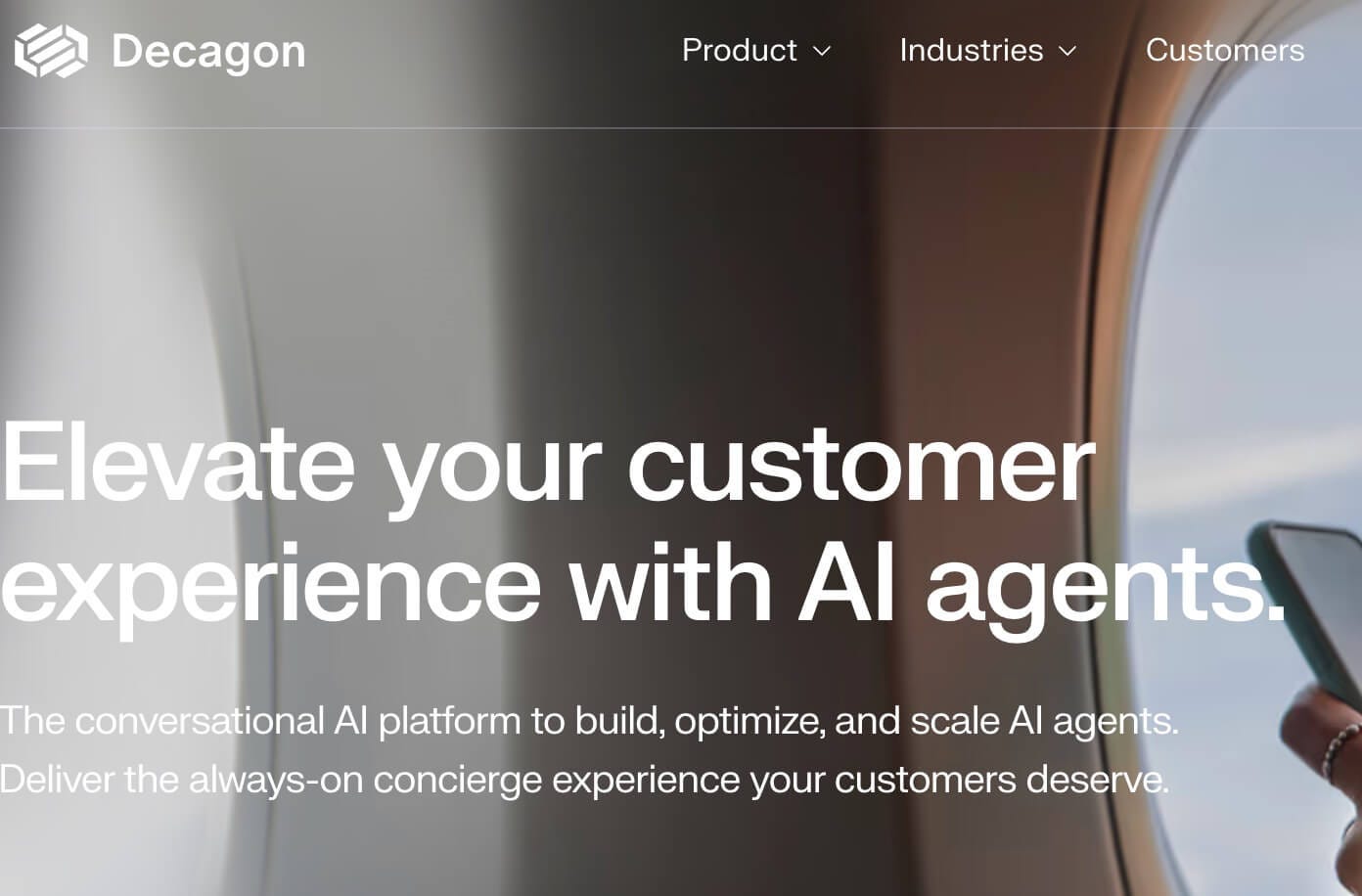
It basically tells you nothing. They make the mistake of selling the category (“hey, you should get an AI customer service agent”) rather than selling the product. I took a block they’ve hidden way down on the page and moved it to the headline while using the “now you can” construction:
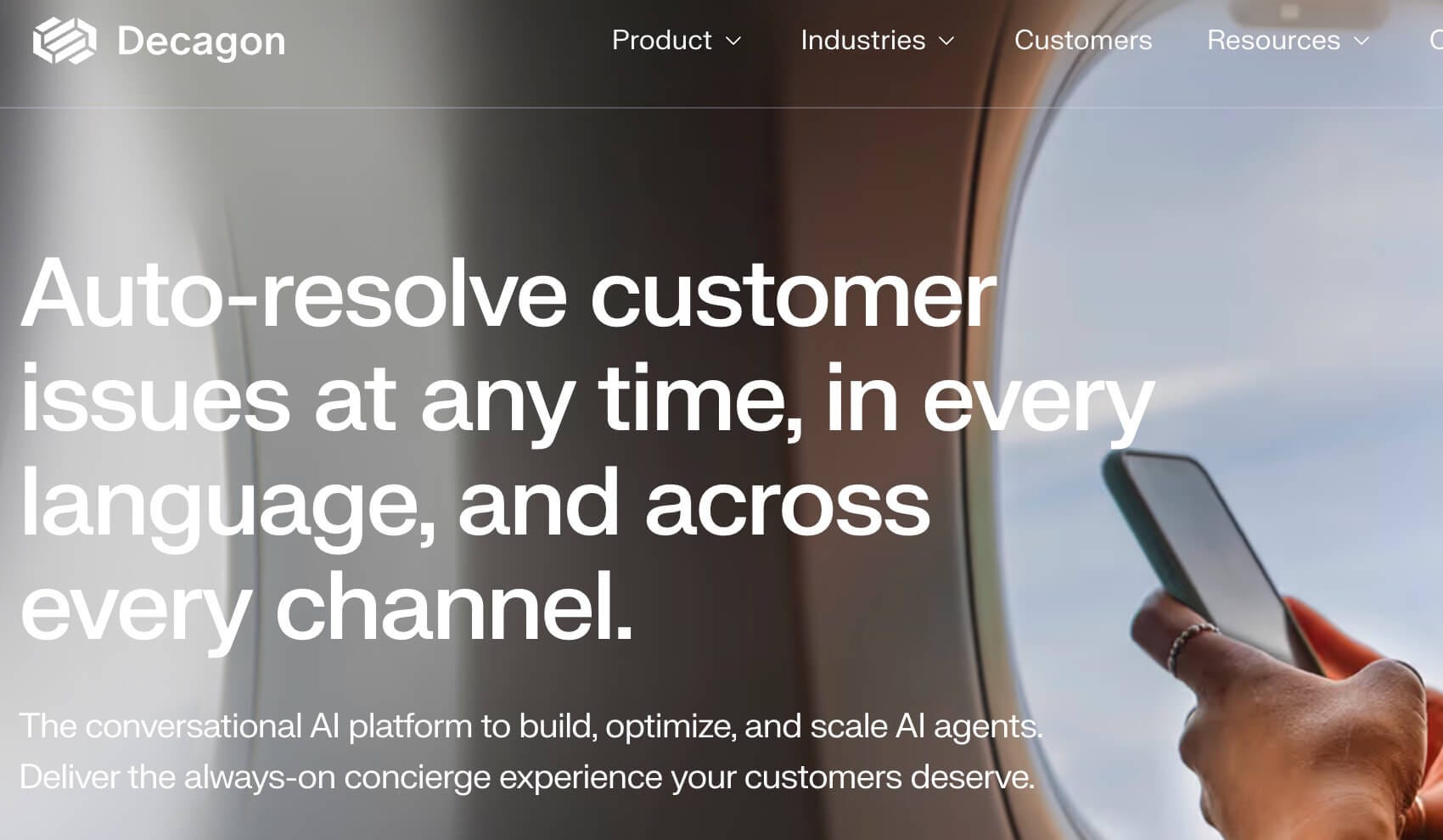
Yeah, maybe a little long - we can cut it down. But now I see what they do and why it matters.
Here’s Cloudtalk…not bad:
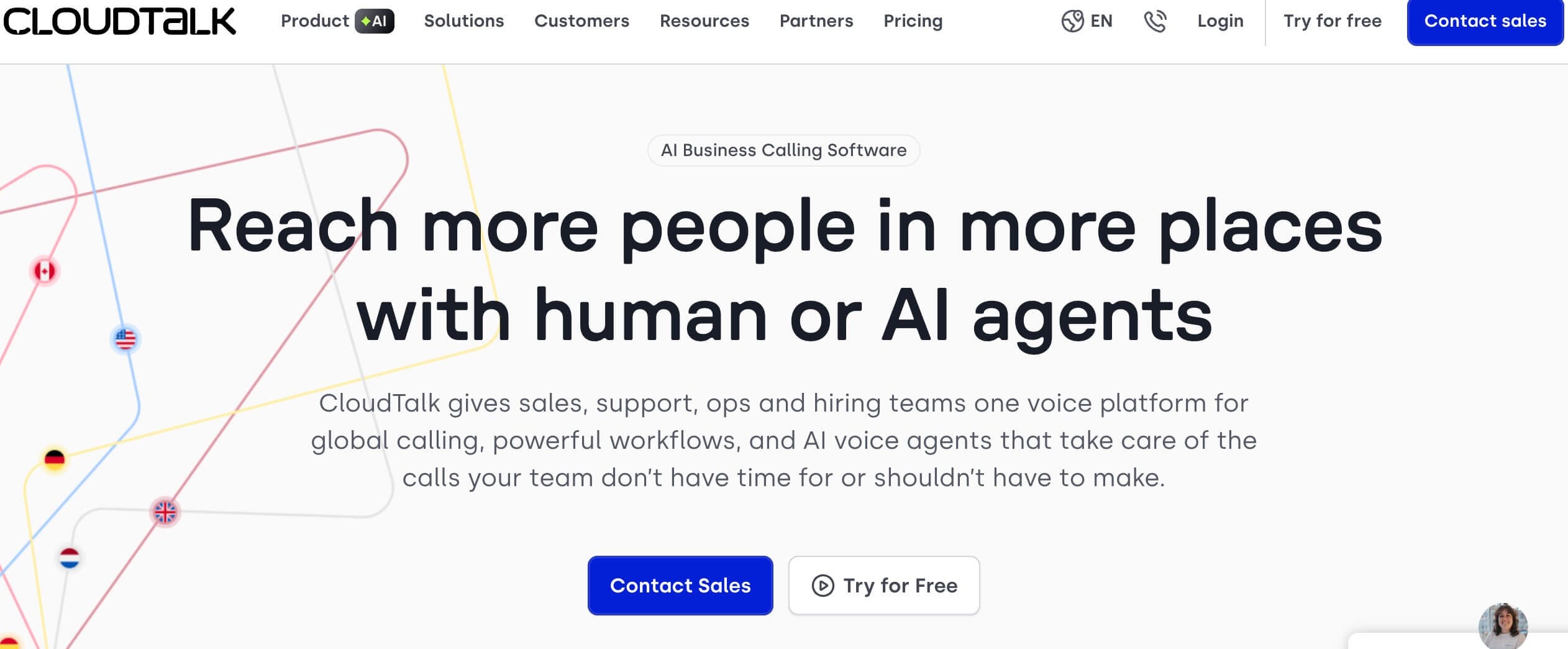
For some reason I virtually never see testimonials as the headline, even though social proof is one of the primary reasons someone buys a product. With Cloudtalk, I thought they could take one of their testimonials and adapt it to be a headline:
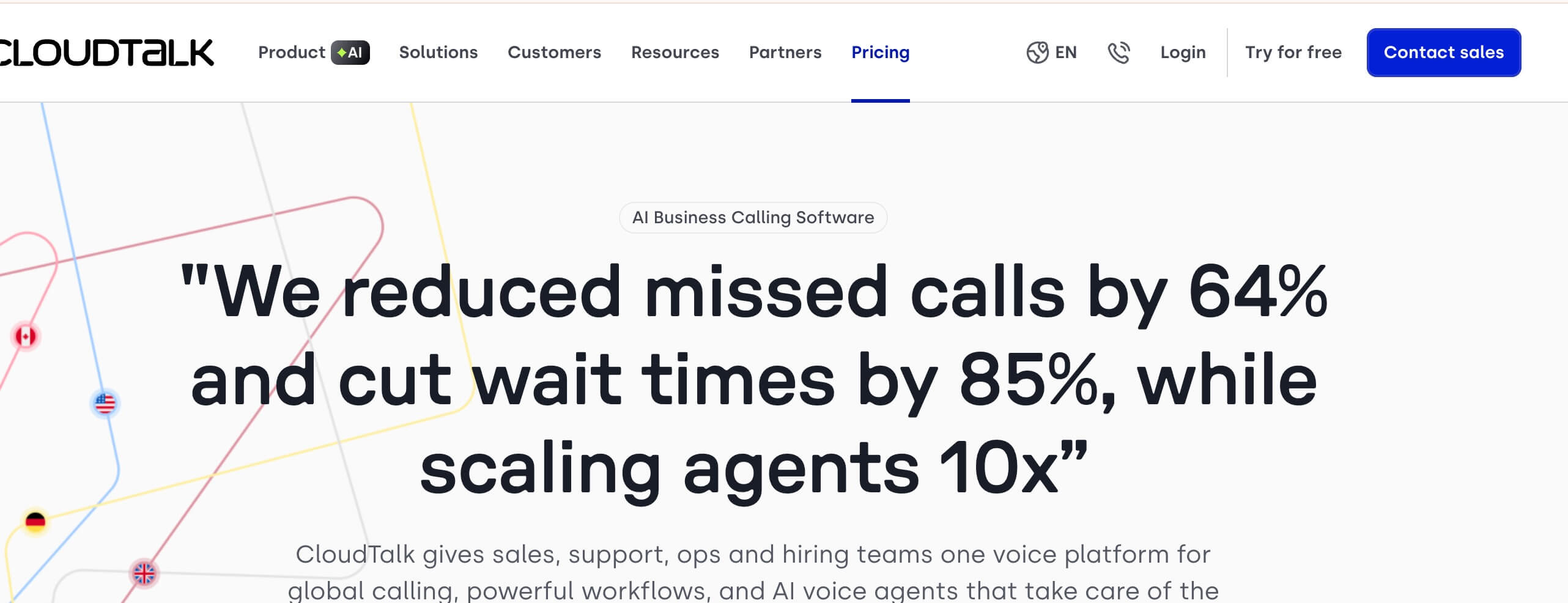
Maybe that’s one number too many, but I see what they do and the benefit and it makes me want to know how they did it.
OK, last one. Yuma is in a crowded space where they’re focused on eCommerce, so the “chatbots for eCommerce” construction doesn’t differentiate enough, as you can see here:
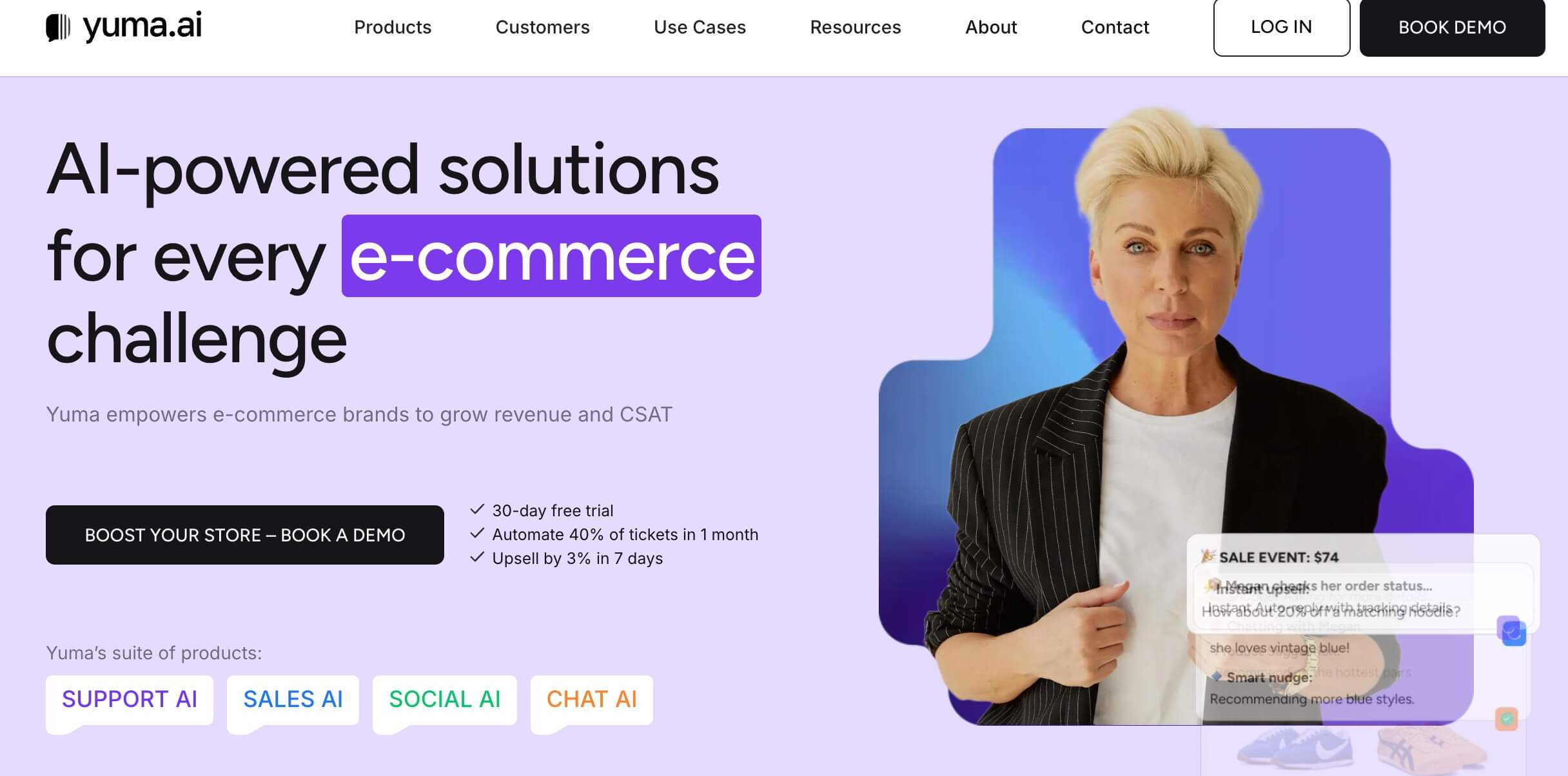
But - and I haven’t worked with them (though I’m available to!) - it appears their real benefit is around the ease of implementation. So I pulled a customer testimonial from the bottom of the page and moved it to the headline:
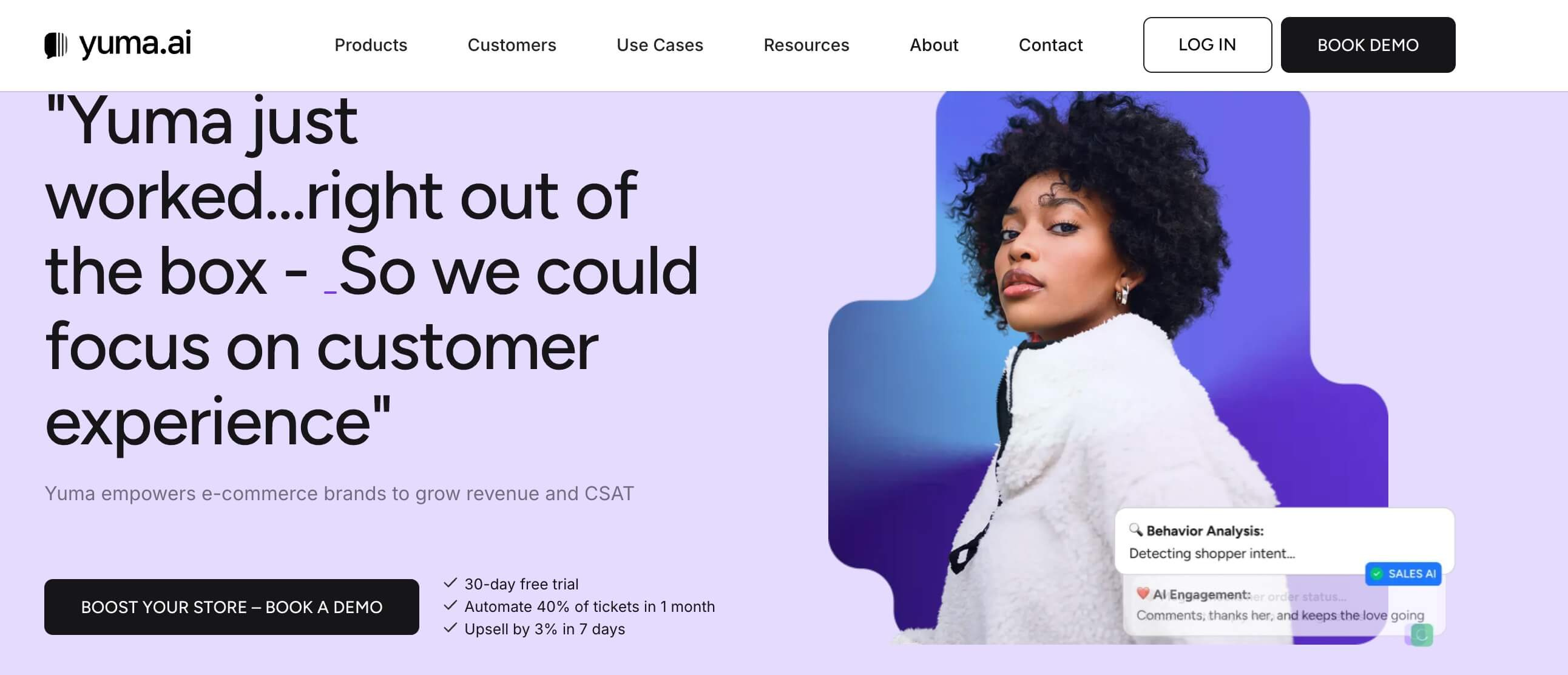
There ya go - 4 ideas for improving your homepage headline. The challenge for companies is that it’s difficult to look at their homepage without bias - your team has likely argued for every change that’s been made over the past few years. Which is why I think it’s useful to bring someone in to help (I’m at jared@sagelett.com - in a half-day workshop we’ll fix that page).
As always, thanks for reading to the end - it’s the best part.
P.S. - Put aside however you feel (if you feel anything) about Bari Weiss’ tenure at CBS, and just enjoy this quote from a New Yorker profile on her:
“She had donned a CBS baseball cap for her first editorial meeting and ended the session by telling the room, “Let’s do the fucking news!”
All week I’ve been thinking to myself, “Let’s do the fucking newsletter!”
I wasn't aware we could use the 'f' word. That really opens some things up for me here.
That Reverse-centaur article is fascinating! Thanks for linking that.