
A Positioning Lesson from Drink-Slinger Dutch Bros
And this might be his first time seeing a hamburger

Hello Gobbledeers,
How’s it going?
One quick Editor’s Note from last week’s newsletter:
You likely have no memory that we were discussing a viral essay, and of that viral essay I wrote, “I’m guessing that someone in your life shared this with you at some point in the last week. Also, I’m guessing that the person who shared this with you is someone you don’t like very much.”
Well ha ha, my friend and Gobbledy reader Keir B. actually sent the essay to me, and then he texted me asking why I don’t like him, and I certainly didn’t want to make it seem like I did not like him because he sent me that article. I do not like him for several other reasons. Thank you for allowing me to clear that up.
End of Editor’s Note.
Onward…
The Gobbledy Messaging Cohorts are in full swing and we’ve got a couple more coming up in March and April for you to choose from. You’ll get:
Three 1-hour sessions with the small cohort
Two 1:1 meetings with me
A roadmap for tighter positioning
5 frameworks for homepage headlines
More than a dozen ideas for sharpening your messaging
Personalized feedback on your new homepage copy
That’s all for $500. I know, that seems wrong. It’s not - I want as many people to have great messaging as possible.
Maybe you’ve got teammates who would like a jumpstart on understanding messaging? Or maybe people on your team who are earlier in their career who would benefit from learning best practices so they can use them when they’re working at your company?
Interested? Sign up here.
In the newsletter today we’ve got:
The first time, ever I saw your hamburger
That’s not coffee, it’s customized energy
The Product of Social Media
I’m going to confess something here:
I am not a social media guy. I do not read it for fun. I do not read it for work. I do not read it in a house. I do not read it with a mouse. I do not read it here or there. I do not read it anywhere.
One of the challenges of not being on social media is that I do not know what is happening each day with Punch the Monkey.
One of the other challenges is that I do not really speak the language of any of the social media platforms.
Yes, I could conceivably post something tomorrow on Instagram. But it would feel like your weird offline uncle posting something. (Gobbledy: Your Weird Offline Uncle. Of Newsletters.)
Every social media platform develops its own written and visual language. I am fascinated with this idea - why do so many LinkedIn posts all sound similar? (I mean even before ChatGPT started spitting out LinkedIn posts that all sounded similar, it is basing that output on the zillions of posts that sounded similar). If I were born into a family with multiple generations of wealth, I could imagine going and getting a Ph.D. in Linguistics and studying how social networks develop their own dialects. Alas, I was not and I will not.
Anyway, what I’m saying is that if you do not spend time on a social media platform and suddenly you start posting there, it will be obvious to anyone watching that you are not a “native” speaker of that platform, as it would be obvious to anyone in Mexico that Spanish is not my first language when I ask them where the biblioteca is and I have a befuddled look on my face when they respond.
(Just a side note - when you learn a new language, why is “where is the library” one of the first things they teach you to say? Like you barely know any words at all in Spanish, so how will the library be useful? It might literally be the least useful place in all of Mexico for you at that point. They really should teach you, “Donde esta the English language bookstore?”)
Where was I? Oh yes, lack of social media fluency.
This becomes a very real work challenge if your CEO comes to you and says, “Hey, I’m not on Instagram, but can you help me make some videos that I can post there so I can seem like a normal regular person?”
Sure, you might say to your boss, who, I forgot to mention, is the CEO of McDonald’s.
You might suggest that the CEO watch a bunch of videos on Instagram so they can get a feel for what “normal” feels like on Instagram.
You might have a discussion about McDonald’s and what McDonald’s really stands for - how do people relate to McDonald’s? What’s the feeling they get when they walk into a McDonald’s?
You might remind them of my favorite piece of McDonald’s corporate marketing lore, which may not even be true anymore but I’ll share it anyway - that the company wanted to be viewed as “a trusted friend.” That if you were driving down the highway at night and you wanted something to eat, you would go to McDonald’s because you would be greeted when you got there, that you knew exactly what would be on the menu, and that the bathrooms would be clean. McDonald’s sold consistency and familiarity.
You might also remind the CEO of the McDonaldland Cinematic Universe (not TM), and the characters they created that stood for the ideals of the company - Ronald McDonald bringing joy; the Hamburgler reminding people that the burgers were so good that someone would steal them; Grimace reminding you that if you ate too much you would become a giant purple blob (that can’t be right.)
The good news, then, is that despite his unfamiliarity with the platform, your CEO is now armed with enough information to create videos that reflect a company that wants to be friendly, joyful, and neighborly while offering familiar comfort foods.
Your CEO will then completely ignore all of that and make this video:

Please go watch that. Please. I’ll wait for you right here.
Alright. You’re welcome.
Have I watched that 10 times? Yes I have.
First, if your brand stands for “friendly, joyful, neighborly” your CEO should never have a consumer-facing video where he’s in an office, which is the opposite of friendly, joyful and neighborly. It makes it look like McDonald’s is like any other soulless company. For God’s sake, he’s about to eat food - he should be in a, well, hm, maybe, I dunno, a McDonald’s restaurant somewhere.
A little story:
When I was younger, I really liked Vienna Fingers cookies:
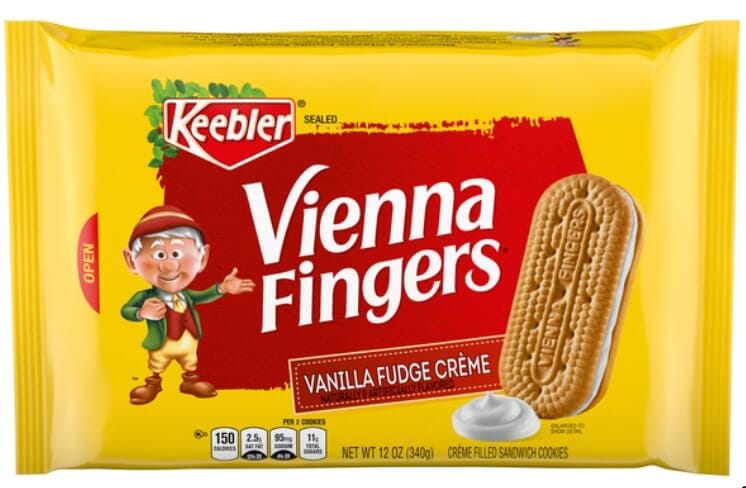
In their ads, the Keebler elves lived in trees where they manufactured cookies. The brand existed within a universe where cookies (that weren’t as good as Oreos) were baked by tiny elves that lived in trees in a forest.
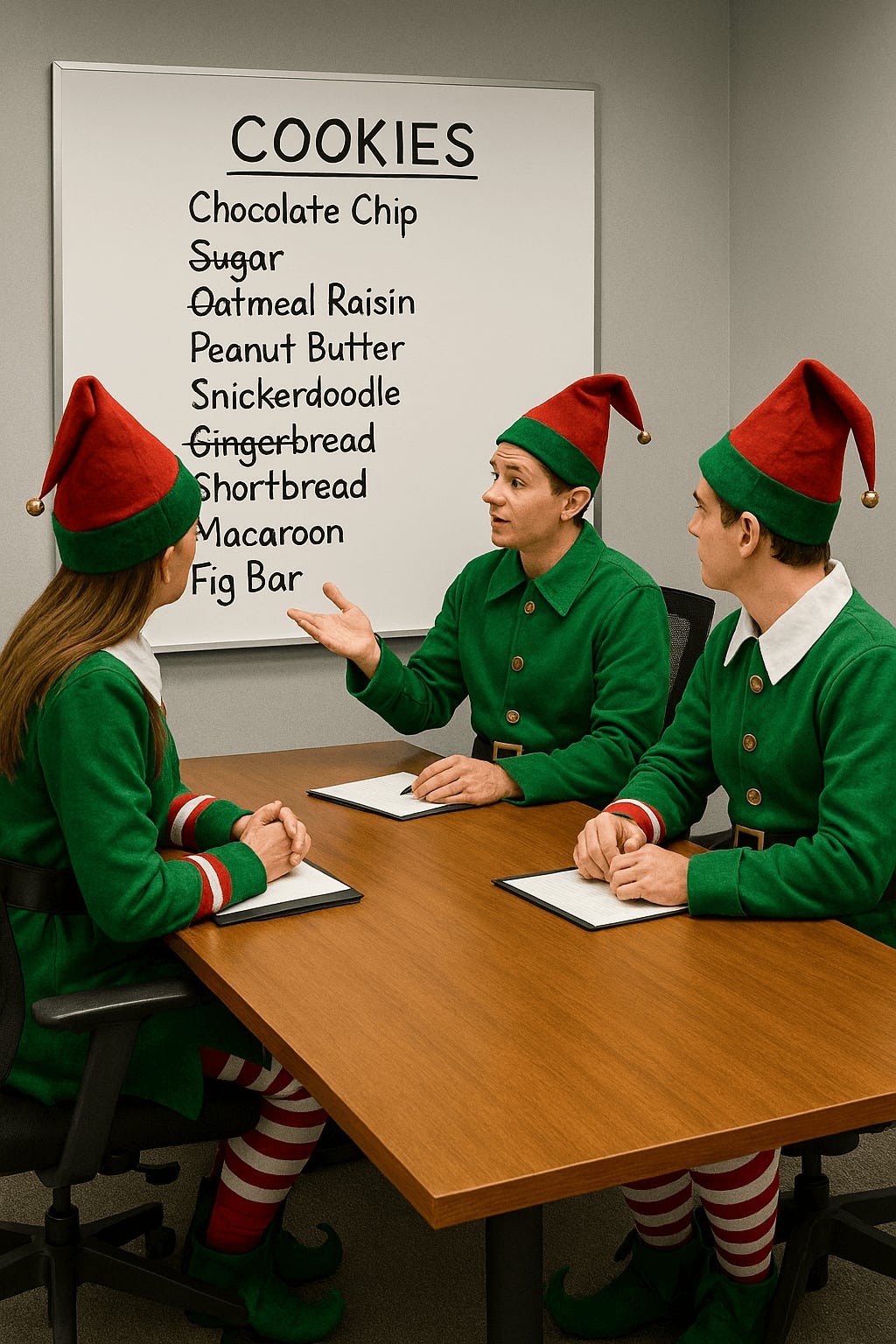
Keebler would never put out any bit of marketing where regular people are sitting in a WeWork someplace and brainstorming cookie ideas. The Keebler universe exists entirely in a forest.
Remember when we talked about the concept of the “money word” - the one word that jumps out, pulls the reader in, and encapsulates the idea that you’re putting forward?
Now, what’s the opposite of the “money word?” Because in that video when the CEO of McDonald’s says, “I love this product,” I think to myself, “yowee, ‘product’ really is not the right word there.”
And when he pretends (?) to struggle with how to hold - and then take a bite of - the hamburger, it makes it seem like perhaps - and I know this can’t be right - that he has neither eaten nor ever seen a hamburger prior to this moment.
Is it fun to dump on sub-par corporate marketing? No, not really. But it illustrates a bigger point - every channel has its place in the mix. But every channel isn’t right for every marketing strategy.
Authentic representations of your brand are great in social channels. Your CEO talking about a new hamburger while sitting and pretending to eat lunch in his office is great for CNBC - your investors want to know that your CEO is working so hard that he can’t even leave his office to scarf down a sandwich.
Or maybe McDonald’s just has some clown running their social media marketing. Dunno.
(Thanks to Gobbledy reader and former roommate Scarlett B. for sharing the video. Go ‘gate.)
Energy Bros
The WSJ published an interview with the Chief Marketing Officer of coffee-and-assorted-drink purveyor Dutch Bros, that included a tidbit I wanted to share:
I always get a little choked up when I read something where a marketing exec is being super clear about their company’s marketing strategy. (Yes, I’m a little emotional about marketing.)
The interview featured this exchange:
WSJ: The energy-drink business is getting increasingly competitive, with Starbucks, McDonald’s and other bigger brands moving in. How are you trying to keep your edge?
(CMO) TANA DAVILA: I see us as the creators of customizable, made-to-order energy. It evolved from guests coming and wanting to add flavors to energy drinks. Over time, we’ve built our own proprietary energy-drink brand, Rebel. We flavor it, we let you add whatever toppings you want. The energy market is growing at a faster rate than coffee, so we are very well positioned to continue to lead.
Dutch Bros, it goes without saying (though I’m saying it, which I shouldn’t have, as it goes without saying, yet here I am) is in a crowded market.
(It is here where I would insert my short clip from 30 Rock where Dennis is telling Liz about his business: “One word: Coffee. One problem: where do you get it? You get it at my coffee vending machine. 38th & 6th in the basement of the K-Mart. You just go downstairs, you get the key from David and BOOM! You plug in the machine.” Except no clip of this exists online, which, given the amount of piracy that is readily available and powering the world’s most (currently) valuable tech companies, is shocking.)
You may scoff at the slight marketing speak of “creators of customizable, made-to-order energy” but could that apply to Starbucks*? I don’t think so, even though Starbucks does allow - and (to a point) encourages customization.
(*I would applaud Starbucks for using “The Starbucks Coffee Company” in their ads, as a way of stressing that their roots are in coffee. Except they appear to have stopped using that phrase. I liked it - when you’re competing with Dunkin - who removed “donuts” from their own name - and Dutch Bros - who are selling energy - it was a way to remind people that they are the one major coffee place that is actually rooted in selling coffee. Oh well.)
Burger King competed with McDonald’s for ages using the slogan “Have It Your Way,” with the message that you can customize your meal at Burger King in a way that you could not at McDonald’s (even if this were not exactly true - most McDonald’s would get you a burger without a pickle if you asked.)
Large companies in a crowded market need a high concept way to differentiate themselves - “customizable” is easily understood. You can imagine a software company using “easy” as a high concept way to differentiate themselves from a big competitor. “We sell an easy way for companies to connect with customers” is a reasonable way to describe a CRM system.
The Dutch Bros example is so good because it shows that they have thought about their positioning - they aren’t addressing the Starbucks drinker, they’re addressing the energy drink drinker.
How are they better than grabbing a Red Bull? It’s customizable, so you get what you want, it’s not sitting in a fridge somewhere (made-to-order), and there’s no trade-off to the benefit (energy).
They only got there because they did the positioning work - what are they, who are they for, and in what way are they different.
When we’ve talked about homepage headlines, one of the options I’ve recommended is “We are a ___ company for ___ people.” If Dutch Bros were a software company, they could use that positioning to have a headline that says, “We are a customizable made-to-order energy company for people on-the-go”
Clear, no? There’s no reason your own messaging can’t be equally clear.
As always, thanks for reading to the end - it’s the best part.
If you want to join a Gobbledy Messaging Cohort, sign up here.
Interested in reaching 3000+ marketing execs to tell them about your product? Let’s chat about advertising - I’m at jared@sagelett.com
P.S. I loved this story about two coworkers at a Dim Sum place in NYC. The NY Times has done an amazing job finding the emotional resonance in stories of people working in the restaurant industry.
Scarlett B was a good roommate. And that is an incredible Instagram story.