

Hello Gobbledeers,
How’s it going?
I can no longer remember when I said I would start writing new newsletters, but I think it’s 2 weeks from now. So this is your penultimate Gobbledy Classic (tm) - which are all, by definition, classics - before going back to reading a mix of garbage, B- level work, and future classics.
But before then: There has been so much good stuff that I’m not going to be able to write about (for example, the Callaway Golf ad where a guy shoves a woman for almost touching his golf club), but I wanted to share one thing that I found notable (and there can be class participation!):
There was an article a week back about how an online marketplace called PublicSquare, which was backed by the current President’s son, collapsed and has pivoted (?) to becoming a “financial technology” company. Whatever.
Now, we’re all adults here, yes? OK good.
One of the things the article notes that the company did as the business was falling apart was divesting itself of some of its non-core assets. For example, it “sold off a diaper brand marketed to antiabortion consumers.”
And I suppose I could go look up the name of those diapers, but please don’t make me do that. Also, please tell me that instead of listing their sizes in months, it’s listed in trimesters.
Anyway, I was thinking about what the slogan could possibly be for this anti-abortion diaper company - not least of which because literally every diaper company is aimed at people who have not had an abortion (no?)
So I settled on, “Because you have no choice” as their tagline. Am I getting antsy not writing this newsletter every week? Yes. Yes, I am. If I were writing regularly would I have thought to myself, “maybe just keep that to yourself?” Yes, probably.
Alas, here we are. What I’m saying is - if you have a better tagline, please add them in the comments. Wrong answers only, please.
Onward…
In this week’s Gobbledy Classic (tm): If soda makes you fat, just say it makes you thin.
If You Drink Enough Soda, You’ll Lose Weight
A brand that’s been around for more than 100+ years has probably tried every marketing strategy in the book (or in the newsletter). And at some point, no matter how many marketing execs you’ve fired in the process, you’re going to run out of ideas.
But before you run out of ideas, you have to try some really crazy ideas.
The Coca-Cola company, for example, thought this guy would be a good spokesperson:
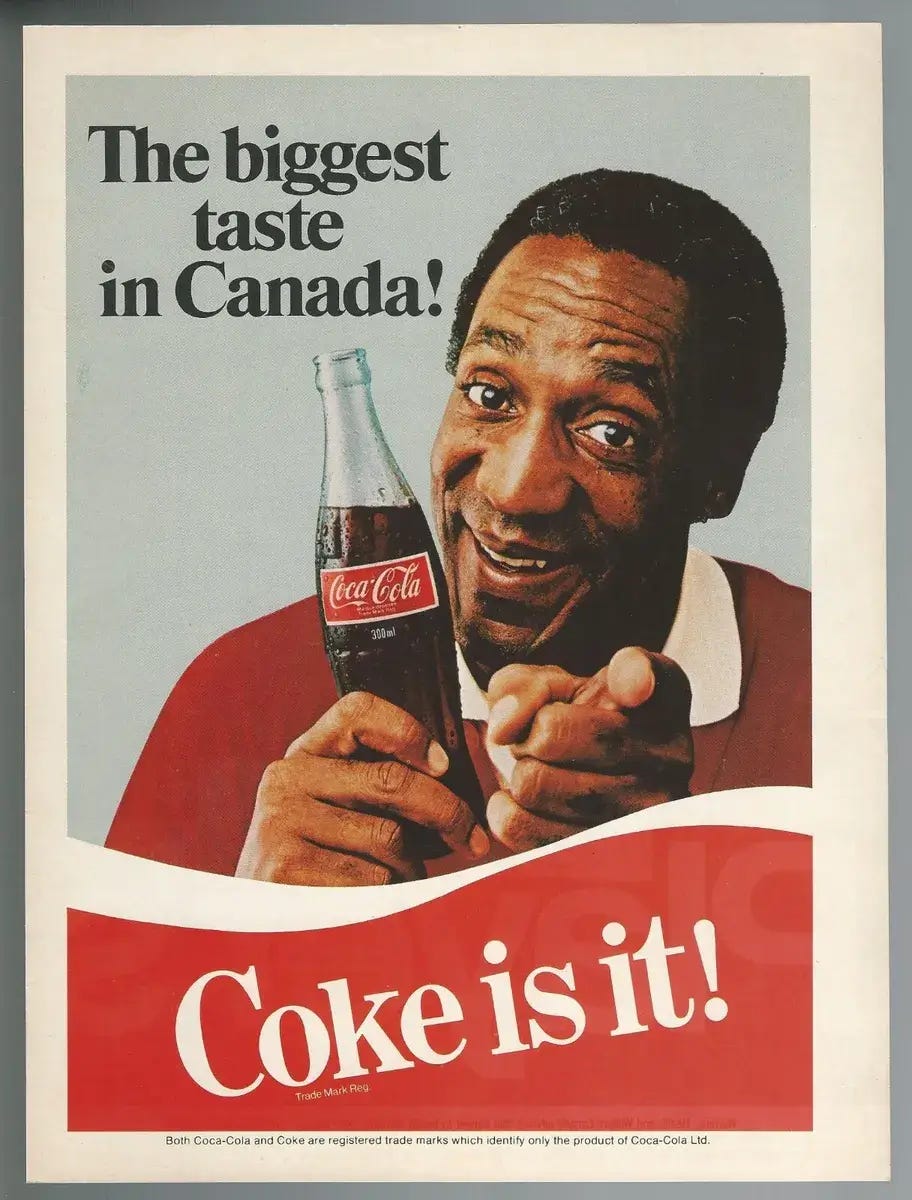
Oops!
But before they hired him, they had a different idea about how to get more women to buy Coke. And that idea was to tell them that Coke was actually a great way to lose weight! Of course!
So in 1961 they hired actress Connie Clausen to tell women that as a “waistline watcher” she was happy that “there’s no waistline worry with Coke” because it “has no more calories than half a grapefruit.” (That can’t be right…)
Plus, Coke is good for you because it’s “a natural, wholesome blending of pure food flavors.” Non-specific food flavors.
But my favorite line in the ad is where she says that Coke is great because if you drink it, you probably won’t eat an entire cake. Or something. “It keeps me from eating something else that might really add those pounds.” I’d suggest that a new cannabis company should also use that reasoning in their marketing: “These gummies keep me from using meth, which could really mess up my teeth.”
I guess what I’m saying is - we’ve never really discussed the strategy of “treat your audience like they’re barely sentient morons,” but that can work! How did Coke confront the concern that drinking too much Coke will make women fat? Easy! They just told them that it’s full of food flavor, and it’s nearly impossible to eat a pan of brownies while you’re also drinking a bottle of soda.
AI Software Websites Are the New Gartner Graphic
The explosion in AI companies has led to an explosion in every type of gobbledy imaginable.
We have the gobbledy of whatever H20.ai is trying to tell us here:

Simple! Enterpriseh20GPTe to EvalStudio, powered by R.A.G. = Gold, Jerry!
Not Beer Is the Not Beer of Not Beers
Here’s a dirty secret:
I’ve written about 100 of these newsletters now, and all of them are about how you’re going to struggle as a company if you skip over positioning and just start talking about your product.
And yeah, sure, that’s definitely true in the software world, but also maybe it’s not exactly true if your salespeople are good enough to overcome terrible marketing (maybe they are - I have no idea.)
But consumer packaged goods (CPG) companies don’t have this luxury - if you’re going to launch a new food product, you need to figure out where there’s white space in the market, because shelf space is limited and Wal-mart isn’t going to make room for you if an alternative already exists.
(Like maybe the white space is that Coke is the diet soda of non-diet sodas.)
As a way of creating white space in the market, we’re seeing a trend now of startup-y CPG companies using packaging as the product differentiator, rather than the product itself.
Liquid Death water, with its packaging that makes it look like an energy drink, didn’t exactly start this trend, but their success has been an inspiration for other brands.

Just as people misunderstood why Warby Parker’s success was not simply because it decided to sell glasses online instead of at optometry stores, Liquid Death isn’t a success just because it comes in unexpected packaging. It’s created a whole world around the gap between the presentation of the brand (dangerous, morbid) and the product (water), and then built a community around that idea. Someone will write a book about them at some point. It’s brilliant.
We don’t talk much about packaging here, though in last week’s blurb about PostHog’s pricing page, one of the jokes on the page was that the software came in a Windows 97-style box on a CD. Har.
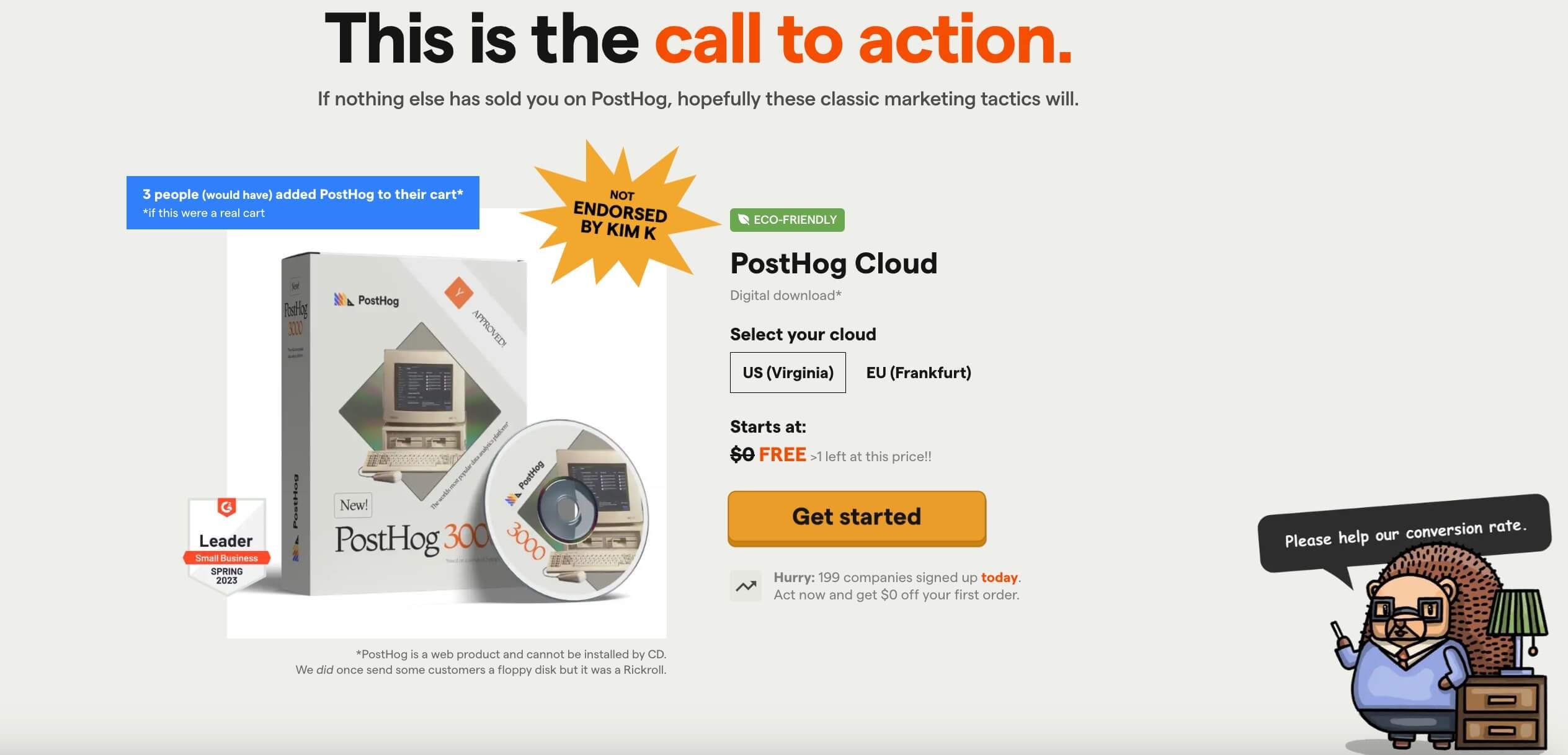
But creating packaging that’s normally associated with a different type of product actually can be a clever way both to gain shelf space and to differentiate yourself.
Behold, Not Beer:
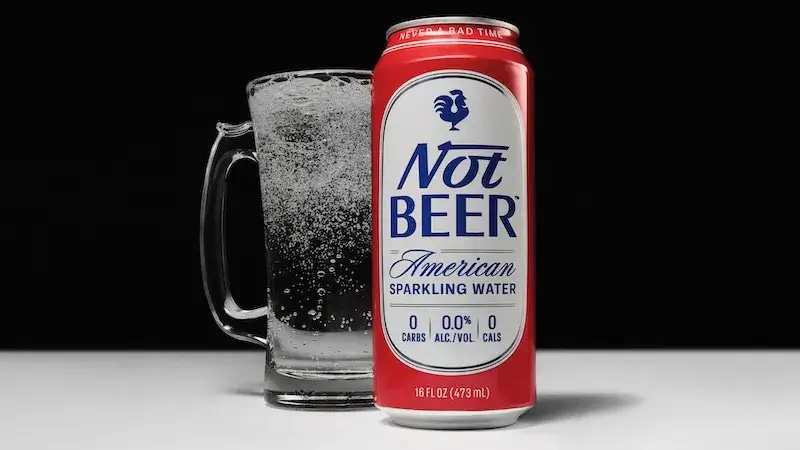
Yes, Not Beer is not beer, but it’s also not not beer, in that it’s just sparkling water.
And I have to give Not Beer’s founder credit for making my brain ache a little bit when he told Modern Retail that Bud Light actually inspired the brand and packaging:
“I came up with the idea when I saw a Bud Light Next billboard on a drive, which said ‘zero carbs,'” Dandurand told Modern Retail. “So I thought, at what point is this just water?”
I feel like that’s something you come up with after you’ve been enjoying some Not Weed on a Sunday afternoon.
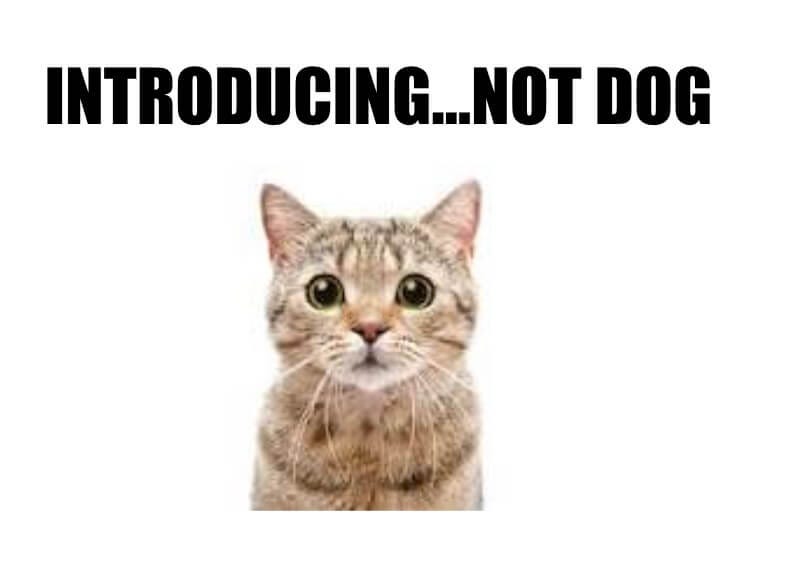
If a beer has no carbs and almost no calories, well then goddammit it really IS just water.
That Modern Retail article is worth a read - the founder actually gives really interesting advice about how to break through in a new market:
“A lot of the benefits of alcohol is this fantasy world we buy into,” Dandurand said. This feeling, he noted, cannot easily be easily replicated by non-alcoholic cocktails. “We’re riding the [non-alcoholic beverage] trend as a sparkling water, so we’re taking an alcohol marketing approach to it,” he said.
That’s a great insight for entering a crowded market (like non-alcoholic beverages). In this case, if you’re selling non-alcoholic drinks, you can market them as “non-alcoholic drinks,” which is to say, you’d be marketing them as their own category. But then you’d have to create that category, and you have to come up with reasons why someone would want a non-alcoholic drink.
That can be a perfectly reasonable idea - Athletic Brewing Company has pitched their non-alcoholic beers as a drink for athletic people. There was whitespace there, and they filled it. Good for them.
But another option - one that Not Beer is taking - is to sell a non-alcoholic product as if it had alcohol. They’ll use the typical alcoholic beverage playbook (which works) except their product isn’t alcoholic.
That’s not crazy at all - Coca Cola (after dispensing with both Cosby and “Coke keeps you thin”) introduced Coke Zero as a way to sell a non-sugared Coke product, but not sell it as a Diet drink (they already had Diet Coke for that). Sell non-sugared soda in the same way you sell sugared soda. Smart.
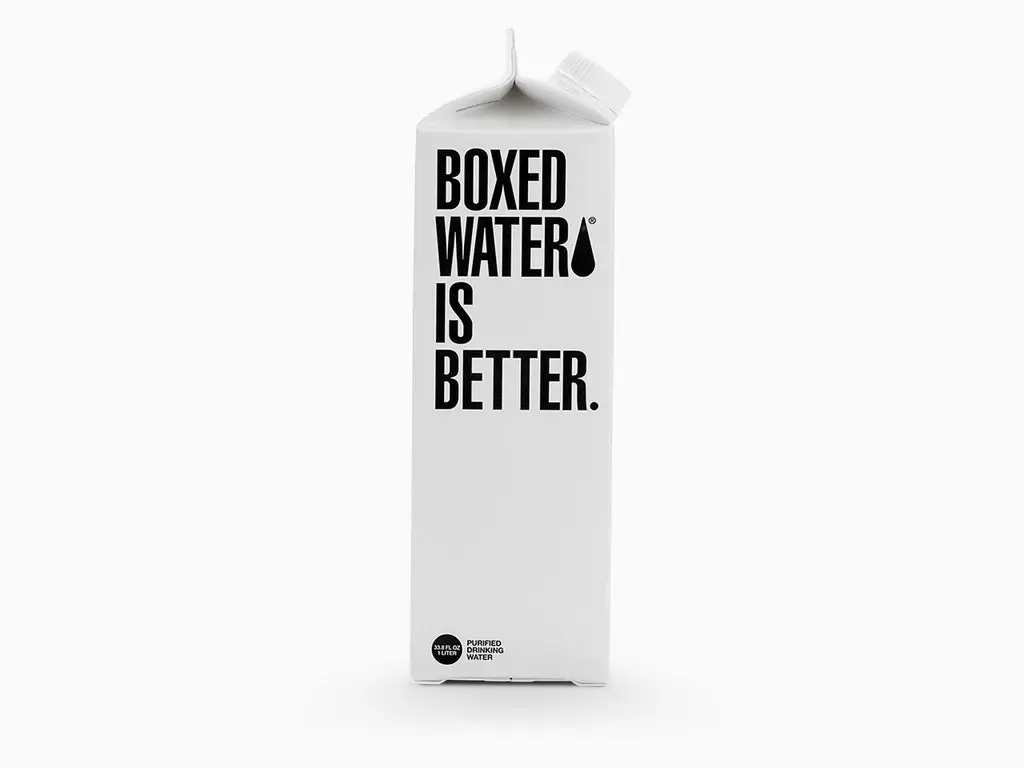
I generally get a kick out of the idea of selling an item in unexpected packaging. To wit:
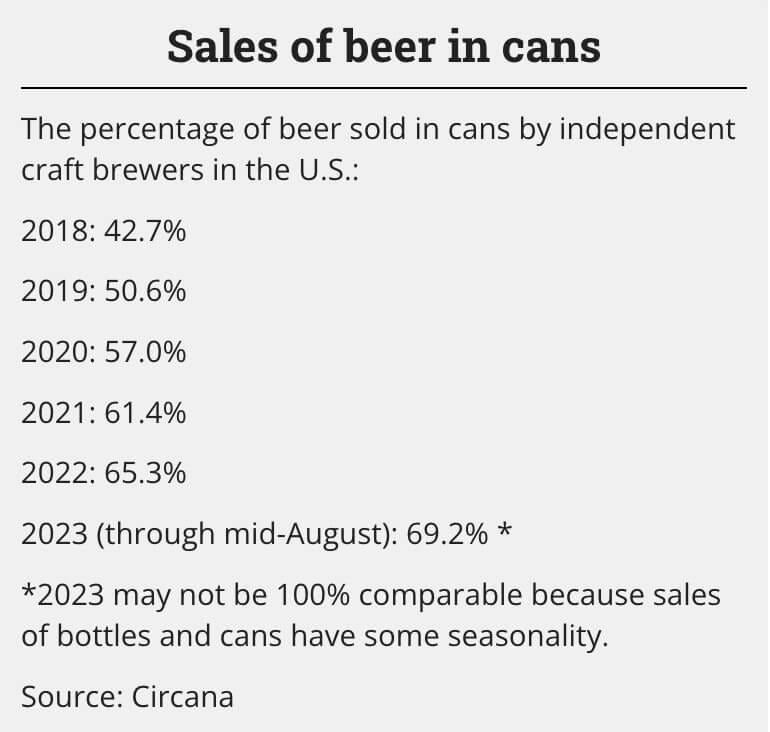
And the beer world has already gone through a packaging transformation of its own, as independent brewers have switched to cans, in some part as a way to signal that it’s “authentic,” (or something), which is amusing because cans were considered inferior to bottles for much of my adult life. And now cans are considered “authentic beer” while bottles are more aligned with “corporate beer.” But, like with the resurgence of vinyl albums, marketers can always show authenticity by adopting older packaging.
My favorite packaging story comes from delicious-but-cursed New York-based ice cream brand Ample Hills, which nearly went out of business trying to appease a founder’s obsession with selling the ice cream in 1930s-style square pints (“squints”), as an article on the company pointed out:
But there is a reason why pretty much everyone uses the round ones. Among other things, the corners of square pints melt faster, and the packaging breaks off. They are harder to fill properly — it took three months just to be able to fill them without it looking sloppy, wasting product and packaging. Plus, filling the squints required a custom-made $180,000 machine, one that, in the case of Ample Hills, never worked properly.
And, like all good, insane failures, it’s reported that the founder “had begun to think of himself as ‘the Steve Jobs of ice cream’.”
Key takeaway: Someone will make a fortune delivering oatmilk in glass bottles.
This Has Nothing to Do with Marketing
Would you like to see Liberace performing in a 1960s song-and-dance number featuring the Simon and Garfunkel song Feelin’ Groovy? No? Yes you do:
You’re welcome. And I’m sorry. Also, you’re welcome.
As always, thanks for reading to the bottom. We’ll see you next week with another Classic, and then in 2 weeks - new stuff!
"Yes, Not Beer is not beer, but it’s also not not beer, in that it’s just sparkling water."
I feel so stupid and so smart at the same time while reading this sentence.